
The early 1980s represented a plateau in the Indian automotive landscape, a market dominated almost entirely by two functional, aging icons: the Hindustan Ambassador and the Premier Padmini. This era lacked a domestically manufactured vehicle that truly represented modern luxury and imposing stature. Then comes Hindustan Motors Contessa.
In an era of utilitarian sedans, the Hindustan Contessa dared to look like a CEO’s car. Four decades later, its long-hood stance and Isuzu-powered evolution still captivate enthusiasts.
A market dominated by the Ambassador and Padmini finally met its aspirational foil: the 1984 Hindustan Contessa. Its long, low, and broad silhouette projected imported luxury and executive presence. Crucially, design and size drove demand in a protected economy—even while the first iteration hid a clear mechanical shortfall.
The Paradoxical Identity: ‘Indian Benz’ Meets ‘Muscle Car’
The Contessa earned two enduring nicknames: the “Indian Benz” for its plush ride and executive aura, and the “Indian Muscle Car” for its long-hood, short-deck proportions. Built from 1984 to 2002, it marked India’s pivot from basic utility to homegrown luxury, foreshadowing the ambitions of a liberalizing economy.
From Luton to Uttarpara: The Genesis and Evolution
The genetics of the Contessa lies in the technical legacy of General Motors’ European operations. By the late 1970s, Hindustan Motors sought to modernize its lineup after three decades of the Ambassador’s production. HM successfully acquired the production tooling and technology for the phased-out Vauxhall VX Series (1976–1978), which itself was a modernized development of the Vauxhall Victor FE. This acquisition, costed approximately £1.5 million.
The assembly line was established at HM’s Uttarpara factory near Kolkata, situated alongside the production facility for the Ambassador. Test vehicles were ready by 1982, and series production officially began in 1984.
A curious detail in the car’s naming is that the moniker ‘Contessa’ was purportedly borrowed from the Japanese Hino Contessa, a vehicle manufactured decades earlier.
The Early Years (1984–1987): The BMC Burden
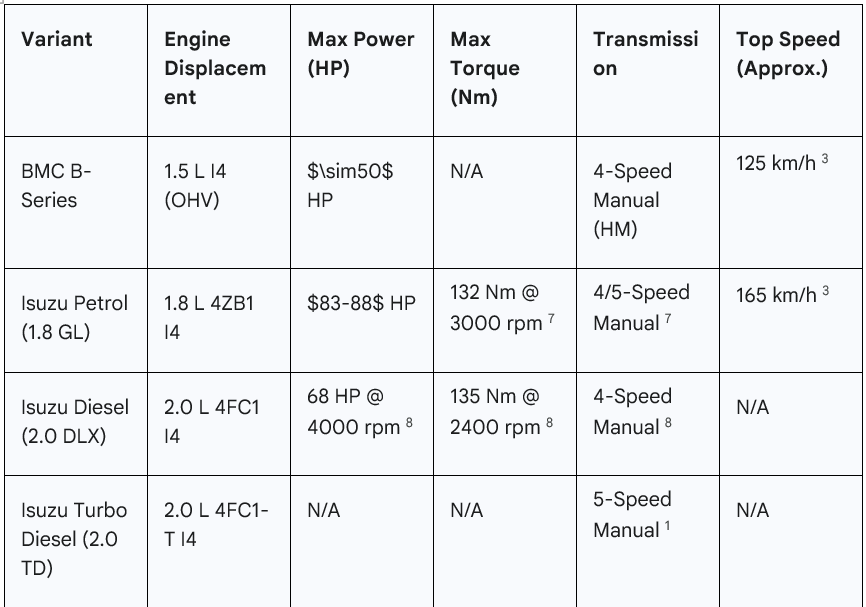
To control costs, HM paired the premium body with the Ambassador’s 1.5L BMC B-Series and a 4-speed gearbox. At roughly 50 bhp pushing 1,200 kg and topping at around 125 km/h, the car felt underpowered, despite universal praise for comfort and cabin space—forcing a swift strategic course correction.
The Isuzu Revolution and the Rise of the Classic (1987 Onward)
A pivotal tie-up with Isuzu brought the refined 1.8L 4ZB1 and a 5-speed manual, lifting output to roughly 83–88 bhp and top speed to about 165 km/h—ushering in the Contessa Classic. With power steering, power windows, and AC, the Contessa finally matched its executive promise with genuine performance and refinement.
Diesel Diversification
Rising fuel prices in the 1990s drove demand for lower running costs, and the 2.0L Isuzu 4FC1 diesel (68 hp) became an instant hit. A 2.0L 4FC1‑T turbodiesel followed in 1996, and by 2002 the main variants were 1.8 GLX (petrol), 2.0 DLX (diesel), and 2.0 TD (turbodiesel).
Design Philosophy: The Architecture of Indian Muscle
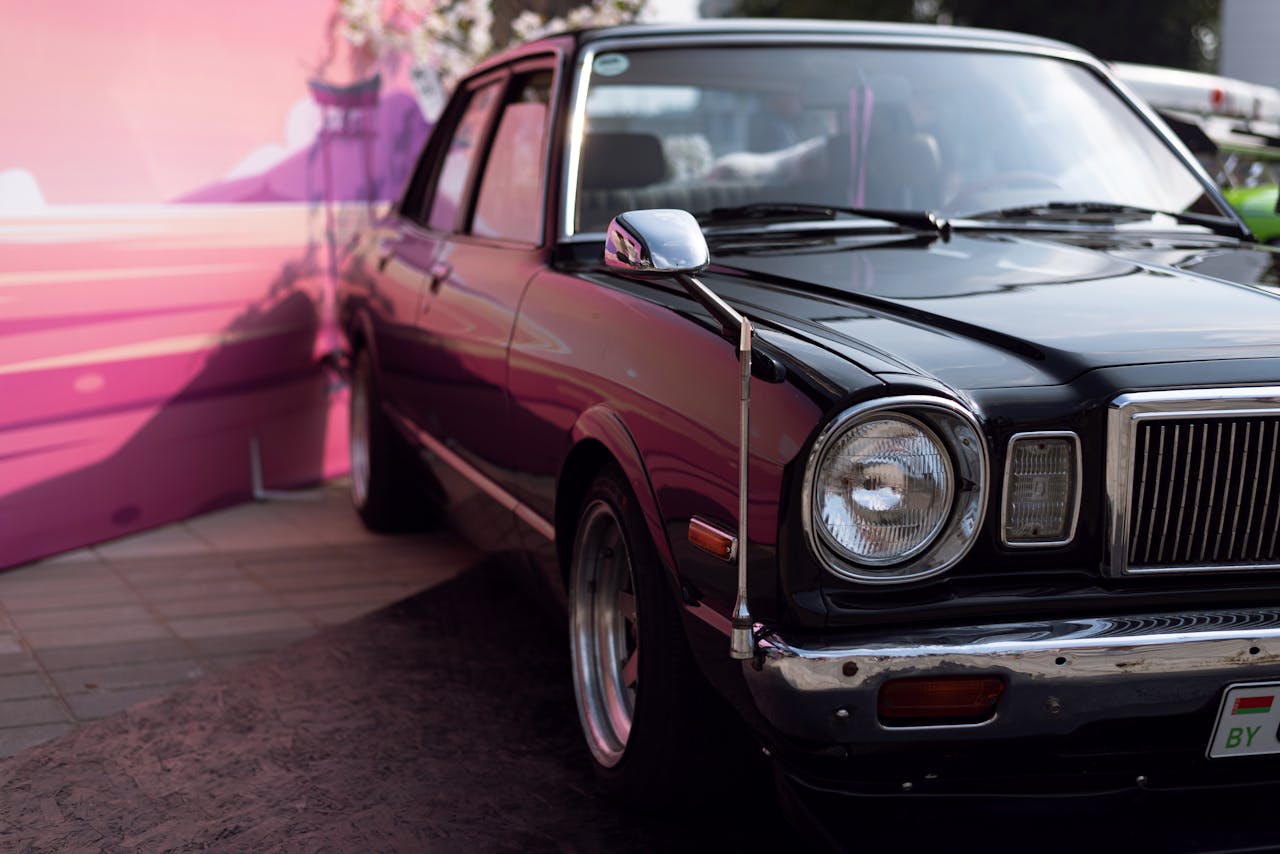
The Contessa’s enduring appeal rests heavily on its classic exterior design, characterized by the clean surfaces, straight lines, and rectangular proportions typical of the Vauxhall and Opel heritage. The long hood and short deck profile were key to its aggressive stance, solidifying its “muscle car” identity in the Indian context. The front fascia featured iconic twin headlamps flanking a black, muscular grille, providing a commanding road presence. Subtle aesthetic updates over its production life, such as locally redesigned bumpers and chrome highlighting on 1990s diesel models, kept the look relatively current.
Interior Layout and Cabin Dynamics
The five-seat cabin prioritized comfort with velour upholstery, supportive headrests, and later, luxury touches such as AC, power steering, and electric windows. Optional Blaupunkt audio and a focus on ride comfort distinguished it from domestic competitors of the time.
Engineering Milestones: Technical Specifications and Powertrain Dynamics
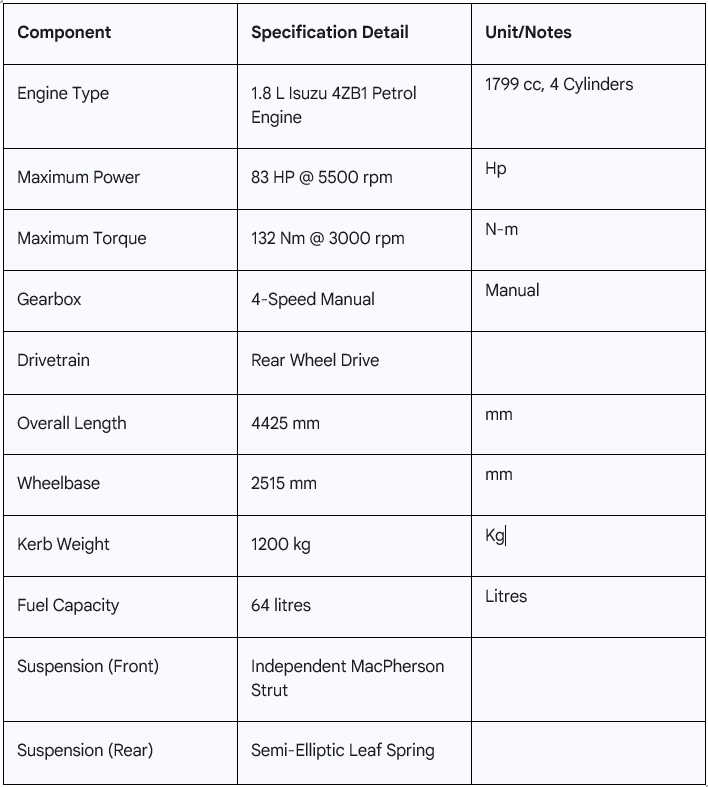
The Contessa was built upon the GM V platform and utilized a classic Front-engine, Rear-wheel drive (FR layout). Its physical dimensions were substantial, with lengths ranging from 4,420 mm to 4,591 mm and a kerb weight consistently around 1,200 kg. The fuel tank capacity across most variants was 64 litres.
The suspension system was robust and pragmatic. It featured an Independent MacPherson strut setup in the front, paired with semi-elliptic leaf springs at the rear. This choice of rear suspension, while technically less advanced than coil-sprung setups, was strategically important. Leaf springs are exceptionally rugged and durable, prioritizing robustness and ease of maintenance over sophisticated high-speed handling, which was necessary for coping with the variable quality of India’s road infrastructure and the high-stress demands of government fleets.
Comparative Evolution of the Hindustan Contessa
Detailed Specifications: Hindustan Contessa 1.8 GL Classic
Conclusion: The Unfading Cult of the Contessa
The Contessa bridged India’s utilitarian past and aspirational future, truly coming into its own with the Isuzu era. Its enduring legacy and brand equity—now protected—set the stage for a potential modern return that finally pairs iconic design with contemporary engineering.
Important Note:
This post compiles information from various sources and is not based on the author’s proprietary research. The author and website owner accept no liability for the content or for any decision you make based on it.
Always conduct your own research before taking action or making a decision.